Games: The Only Legal Place to Kill Stupid
The phrase "Games: the only legal place to kill stupid" is a provocative piece of gaming culture that has transcended its origins as a t-shirt slogan to become a powerful metaphor. At its core, it speaks to the unique, consequence-free arena that games provide—a space for catharsis, strategic thinking, and mastering complex systems. For entrepreneurs, creators, and professionals, understanding this concept isn't about literal aggression; it’s about recognizing the strategic utility of controlled environments where failure is a lesson, competition is a test, and overcoming obstacles is the ultimate goal.
Beyond the T-Shirt: A Strategic Metaphor for Controlled Environments
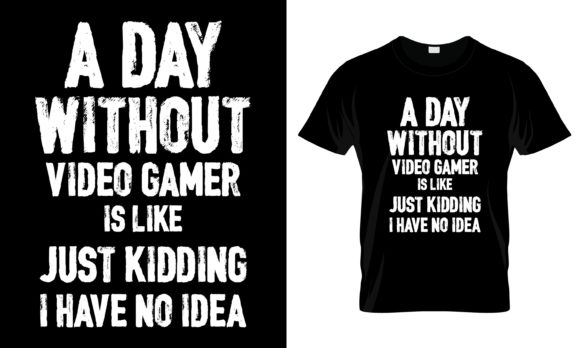
The design, often found as a vector graphic ready for print on apparel or posters, symbolizes more than just a gaming attitude. It represents the idea of a sandbox—a rule-bound space where one can engage with challenges without real-world repercussions. In business and personal development, creating or utilizing such "legal places" is a cornerstone of effective strategy. It’s the practice of simulation, risk-free experimentation, and deliberate practice. Whether it’s a financial model, a marketing campaign A/B test, or a prototype, these are our professional "games" where we can safely "kill" flawed ideas, inefficient processes, or "stupid" assumptions that hinder progress.
Intentional Use in Planning and Decision-Making
Adopting this mindset intentionally transforms how we approach goals. It encourages a culture of testing and iteration. Before committing significant resources to a new initiative, smart teams create a low-stakes environment to validate their approach. This could be a limited-scale pilot program, a workshop to role-play a negotiation, or a competitive analysis that pits your strategy against market rivals in a spreadsheet—your own strategic game board. The key is to establish clear rules and objectives within this controlled space, just as a game has its mechanics. This process allows you to identify weaknesses, refine tactics, and build confidence before the real-world launch.
Applications in Creativity, Communication, and Branding
The principle finds profound application in creative fields and branding. A designer iterating on a logo in a vector file, easily modifying colors and shapes as described in the available SVG and AI files, is playing a creative game. They can "kill" unsatisfactory versions without cost. In communication, framing a difficult conversation as a cooperative game with shared rules can depersonalize conflict and focus on problem-solving. For branding, the t-shirt design itself is an example. The slogan is a bold positioning statement. Using it on merchandise is a calculated move to connect with a specific audience—one that values clever, irreverent commentary and the gaming ethos. It’s a way to communicate brand personality and foster community.
Operational and Productivity Insights from Gaming Mechanics
Games are meticulously designed for engagement and progression. They offer immediate feedback, incremental challenges, and reward systems. Translating these mechanics into operations can boost productivity. For instance, breaking a large project into "levels" or "quests" with clear completion criteria makes daunting tasks manageable. Implementing a points or recognition system for small wins can motivate teams. The "legal place to kill stupid" here becomes the daily operational framework where inefficient habits, redundant meetings, or unclear directives are the "enemies" to be eliminated through structured, gamified process improvement.
Risks and Considerations: Avoiding the Trap of Meaningless Play
While the metaphor is powerful, its application requires caution. The primary risk is engaging in these controlled environments without clear goals or a link to real-world outcomes. It becomes mere play—an endless game with no winner. For example, constantly tweaking a business plan without ever executing it, or holding brainstorming sessions that generate ideas but never select or implement them. The "stupid" you aim to kill must be a defined obstacle: a poor conversion rate, a knowledge gap, a sluggish workflow. Furthermore, the insulated nature of a "game" can sometimes foster unrealistic optimism; the real world contains variables a simulation cannot. Therefore, any strategy honed in a safe environment must be stress-tested against external realities before full deployment.
Long-Term Value and Learning Systems
The ultimate value of embracing this concept is the establishment of a continuous learning system. Games are fundamentally learning engines. By designing professional and personal challenges as iterative learning games, you build resilience and adaptive skill sets. This approach supports long-term results by making improvement a constant, engaged process. It turns the fear of failure into the curiosity of a player facing a new level. Whether you're an educator designing a curriculum, a freelancer mastering a new software tool, or a marketer analyzing campaign data, you are in your legal arena of practice. The high-quality 300 DPI file of the slogan isn't just for print; it’s a reminder of the mindset—that within defined boundaries, we have the license to experiment, compete, and eliminate what doesn’t work to achieve mastery.
Practical Implementation: From Quote to Action
How do you move from appreciating the quote to applying its principle? Start by identifying a current challenge. Then, deliberately design a game around it. Define the rules: What are the constraints? What constitutes a "win"? What resources can you use (like the editable vector shapes of a design file, allowing for limitless modification)? Next, play. Analyze the results. Learn. Finally, translate those lessons into action outside the game. This cycle turns a provocative gaming quote into a practical framework for strategic thinking. It allows adults across fields—from decision-makers to hobbyists—to navigate complexity with the clarity, focus, and iterative spirit of a gamer in their only legal place to kill stupid.